Do The Next Right Thing: When Grief Makes Tomorrow Feel Too Heavy
BY VANDERLY CILLO | SOUL CARE PRACTITIONER & CERTIFIED NEUROSCIENCE COACH
Learning to be present with God in our pain, one day at a time
There are seasons of grief when simply getting through the day feels overwhelming.
Not because we have lost our faith. Not because we don't trust God. But because the weight of what has happened, what has changed, and what we cannot yet understand feels like more than we know how to carry.
I know this because I've lived it.
Several years ago, I walked through a devastating loss that brought me into a depth of grief I had never experienced before. The sadness was heavy, and the unknowns surrounding my future felt almost unbearable at times.
It wasn't just the pain of what I had lost. It was the reality of everything that would never be the same again. It was the crushing reality that all my hope, faith, and love hadn't changed my circumstances, leaving me in more turmoil than I had ever known. I was not just in pain; I was lost and confused. Who was I? Where did I go from here? What and who could I trust?
I found myself trying to make sense of what had happened while simultaneously trying to figure out what life was supposed to look like now while feeling like my past, present, and future were three puzzle boxes, and all the pieces had been thrown together.
Where was my life going? What was my purpose in this new season? How was I supposed to move forward when so much of what I had known had changed?
And perhaps one of the hardest parts was that I simply didn't have answers. I was in deep grief, with a sense of hopelessness and powerlessness, absolutely disoriented about who I was and what to do.
I loved God. I trusted Him. I knew He was faithful. But knowing those things didn't make the sadness disappear, and it certainly didn't answer all the questions I was carrying. Frozen and confused was how I operated most days.
I was grieving what had been, struggling with what was, and overwhelmed by what might be.
And somewhere in the middle of that season, I began to learn something that became deeply personal and profoundly helpful.
I didn't have to figure out my whole life.
I didn't have to understand tomorrow.
I didn't have to know how everything was going to work out.
I only needed to ask:
What is the next right thing for today?
When the future feels too big to carry
I began noticing how much of my emotional exhaustion came not only from the grief itself, but from trying to carry the grief alongside all the unanswered questions about my future.
My mind would move from the pain of the present into the uncertainty of tomorrow, then months ahead, sometimes even years ahead, and then swing back into the broken past.
I was trying to resolve things I didn't yet have the information, strength, or perspective to resolve.
And the more I tried to figure everything out, the heavier, more alone, and more tired I felt.
The Lord began gently drawing my attention back to what was actually in front of me.
What is here today?
What actually needs my attention right now?
What am I carrying that doesn't belong to today?
Some days, the next right thing was practical. I needed to make a phone call, handle a responsibility, or make one small decision.
Other days, it was allowing myself to cry, resting, reaching out to someone safe, or simply sitting with God in the middle of my sadness. I was learning to care for myself in a present way I had never learned before this grief.
I began learning that I could be present to my pain without being continually occupied with trying to solve it.
In other words, I was learning how to be okay when I wasn’t okay. And that distinction became incredibly meaningful.
I didn't need to deny my grief to experience God's presence. And I didn't need to have answers before I could begin to quiet my soul.
A song that gave words to my grief
Just a few months into that deep season of grief, I watched Frozen 2 in the theaters.
There is a scene in the movie when Ana finds herself overwhelmed by loss, darkness, and uncertainty. Everything familiar seems to have fallen apart, and she cannot see a way forward.
Then she begins singing a song called The Next Right Thing.
As I listened, I was struck by how closely the song captured exactly what I had been experiencing. I felt truly seen for the first time in my grief through the lyrics of this song. I saw myself more clearly and empathetically.
There is a line that says:
"This grief has a gravity"
That was exactly what grief had felt like to me.
A heaviness that seemed to pull me downward. A sadness that could make even ordinary responsibilities feel enormous. A loss that affected not only how I felt about the past, but how I imagined the future.
The song moves through the experience of being lost, disoriented, and unable to see beyond the darkness. Anna isn't suddenly hopeful or confident. Her circumstances haven't changed.
But rather than attempting to figure out the entire future, she begins narrowing her attention to what she can do in the present.
One breath. One step. One choice.
I could hardly believe what I was hearing.
This was the very thing the Lord had already been teaching me!
It felt like such a sweet confirmation, as though He had given me another way to recognize and articulate something we had already been practicing together. I felt seen by Him too.
I didn't have to see the entire road ahead.
I only needed enough light for the next step.
And sometimes, that step was simply getting through today.
What Psalm 131 taught me about quieting my soul
As I continued learning to live this way, Psalm 131 gave beautiful biblical language to what was happening inside me.
David writes:
"I do not occupy myself with things too great and too marvelous for me." — Psalm 131:1, ESV
And then:
"But I have calmed and quieted my soul." — Psalm 131:2, ESV
I love the movement in this psalm.
David recognizes that there are matters beyond him. Things too great for him to understand, manage, or control.
And rather than continuing to occupy himself with those things, he describes a soul that has learned to become quiet.
He compares that quietness to a weaned child resting with its mother.
Think about that picture for a moment.
The child is not merely coming to its mother to receive something. There is a settled contentment in simply being near her.
And that image began to speak to something very tender in my own relationship with God.
Was I only reaching for God because I needed Him to resolve something? Or could I learn to reach for Him simply because I needed Him?
Of course, I wanted answers. I wanted relief. I wanted my circumstances to change.
And there was nothing wrong with bringing those desires to Him.
But I began recognizing that sometimes my time with God was consumed with trying to find a solution, direction, or explanation. The majority of my prayers and time with Him had been spent asking Him to change my circumstances.
I could be physically sitting with Him while mentally reaching into tomorrow, searching for something that would make today feel less painful.
Yet what if the invitation wasn't to figure everything out? What if the invitation was simply to be with Him?
To let myself be sad in His presence.
To bring Him the questions without demanding immediate answers. Oof, that can be so difficult at times.
To allow the pain to be acknowledged without making its disappearance the condition for experiencing peace. This. This has been one of the richest gifts I have received through experiencing deep anguish.
I could reach for His presence, not only for a resolution from Him.
And that began changing how I approached my grief.
God wants to be with us in our suffering
One of the most comforting truths in Scripture is that God does not distance Himself from us when we are hurting.
Psalm 34:18 tells us that the Lord is near to the brokenhearted.
Notice that it doesn't say He is near only after our hearts have healed.
He is near in the brokenness.
Jesus Himself entered into human sorrow. He wept at the tomb of Lazarus, even knowing that resurrection was coming.
That matters to me.
Because sometimes we can become so focused on what God is going to do next that we miss His invitation to be with Him right now.
We want Him to show us how everything is going to turn out, but He is inviting us to discover His companionship in the middle of what has not yet turned out.
We want the pain to stop, but He welcomes us to bring the pain to Him.
We want certainty about tomorrow, but He offers us His presence today.
This doesn't mean the pain disappears. It doesn't mean we stop asking questions or longing for things to change.
It means we are learning that we don't have to wait for resolution to experience relationship with God.
There is something deeply tender about discovering that I can be fully honest about my sorrow and still find a place of rest in His nearness.
Learning to come back to today
Over time, I began developing a simple practice that helped me become more present when grief or uncertainty felt overwhelming.
I would pause, breathe, and begin noticing what was happening inside me.
Rather than immediately trying to fix how I felt, I would ask myself questions.
- What am I feeling right now?
- What is taking up the most space inside me?
- What is actually mine to carry today?
- What am I trying to figure out that doesn't need to be figured out today?
I also began learning to ground myself in what was true, rather than becoming consumed with everything that was unknown.
Some of the questions that became meaningful were:
- What do I know to be 100% true today?
- Where did I experience even a small moment of joy today?
- Where did I sense God's presence or care today?
Sometimes I couldn't identify joy. Sometimes I didn't feel particularly close to God.
The questions helped me become curious about what was actually happening in the present.
I was slowly and repeatedly returning to myself and the present instead of wandering back into the past and getting swallowed up by pain and regret, or becoming consumed with anxiety over what I couldn't figure out or control.
I could acknowledge what was painful without losing sight of everything else that was also true. When my thoughts began racing ahead again, I could gently bring myself back.
Not tomorrow. Not next month. Not the rest of my life.
Just today.
What is the next right thing for today?
Near the end of The Next Right Thing, Anna sings:
I won't look too far ahead
It's too much for me to take
But break it down to this next breath
This next step
This next choice is one that I can make
So I'll walk through this night
Stumbling blindly toward the light
And do the next right thing
And with the dawn, what comes then?
When it's clear that everything will never be the same again
Then I'll make the choice
To hear that voice
And do the next right thing
And for today, let that be enough.
An invitation to practice
Out of my own journey, I created a gentle reflection exercise called Do the Next Right Thing.
It is designed for those navigating grief, overwhelming emotions, difficult transitions, or seasons of uncertainty.
The exercise helps you slow down, notice what is happening inside you, separate what belongs to today from what doesn't, and begin discerning what your next faithful step might be.
You do not have to carry the whole road today.
Sometimes, the next right thing is enough.
A resource for your journey
Do the Next Right Thing: A Gentle Practice for Grief, Overwhelm & the Unknown
If you are navigating a season of grief or uncertainty, I invite you to use this reflection at your own pace. You can return to it as often as you need, allowing the questions to help you notice, process, and become present with God in whatever you are carrying today.
NeuroFaith Integration — Where neuroscience and Scripture unite.
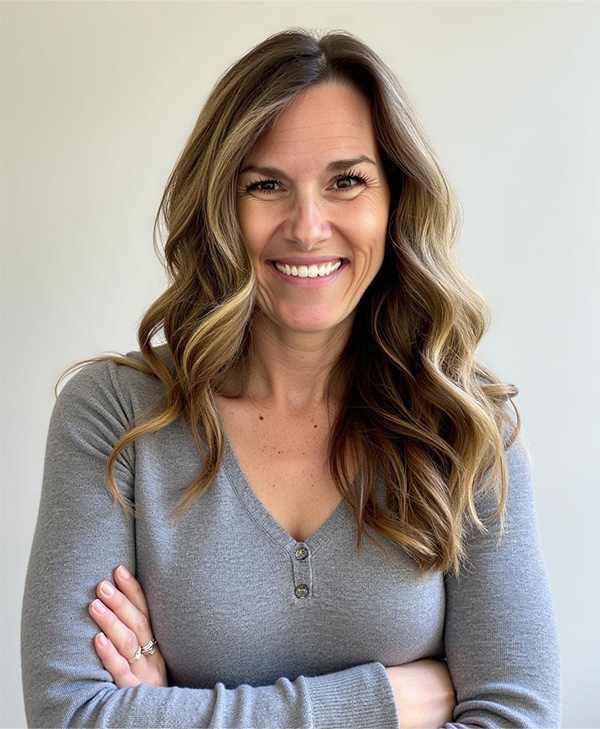
Vanderly Cillo is a soul care practitioner, certified neuroscience coach, and licensed minister who integrates neuroscience, spiritual formation, emotional well-being, and relational care. She helps individuals understand what is happening within their brain, body, emotions, relationships, and personal story while guiding them to encounter God within their experiences and move toward greater freedom, integration, and wholeness.

Certified Neuroscience Coach — Spiritual Director — Licensed Minister

Vanderly is a Soul Care Practitioner, Certified Neuroscience Coach, and Licensed Minister who supports individuals in emotional and spiritual growth through faith-based and neuroscience-informed practices.
Professional Disclosure: Vanderly Cillo is an ordained minister and certified coach. She is not a licensed mental health professional in the State of Florida and does not provide psychotherapy, diagnosis, or treatment of mental health disorders. Services are offered as pastoral care, certified neuroscience coaching, and faith-based support for emotional and relational growth and are not a substitute for licensed mental health care.
Professional Disclosure: Vanderly Cillo is an ordained minister and certified coach. She is not a licensed mental health professional in the State of Florida and does not provide psychotherapy, diagnosis, or treatment of mental health disorders. Services are offered as pastoral care, certified neuroscience coaching, and faith-based support for emotional and relational growth and are not a substitute for licensed mental health care.
2026 - Copyright. All Rights Reserved. Made by Arising Co.